Why Professional Marine Construction Planning Saves Time, Money, and Future Repairs
- Bryan Legend
- Jul 16
- 4 min read


Building near the water requires a different level of planning than traditional land-based construction. Waterfront environments are constantly changing due to tides, waves, rainfall, currents, and seasonal weather patterns. These conditions create challenges that can affect the stability, durability, and lifespan of any structure if they are not addressed during the planning stage. A successful waterfront project is not simply about building something strong today—it is about ensuring the structure continues to perform safely and efficiently for many years.
Many property owners invest in marine construction to improve shoreline access, protect valuable land, and create durable waterfront infrastructure. Working with experienced professionals from the beginning helps identify potential issues early, allowing projects to move forward with fewer delays, lower maintenance costs, and better long-term results.
Every Waterfront Project Begins With Careful Planning
The planning stage establishes the foundation for every successful marine project. Before equipment arrives on-site, engineers and contractors evaluate a wide range of environmental and structural conditions that will influence construction.
Each property presents different challenges. Soil characteristics, shoreline slope, drainage, water depth, vegetation, and exposure to waves all affect the final design. Ignoring any of these factors may result in premature deterioration or expensive repairs later.
Professional planning ensures every decision is based on real site conditions instead of assumptions.
Site Investigations Reduce Construction Risks
Comprehensive site assessments help contractors understand how the property behaves under both normal and extreme environmental conditions.
Evaluating Soil Strength
Strong foundations depend on stable ground. Engineers often perform geotechnical investigations to determine whether the existing soil can safely support the planned structure or whether additional stabilization measures are necessary.
Measuring Water Conditions
Water levels rarely remain constant throughout the year. Seasonal rainfall, tides, droughts, and storms can all influence construction decisions. Understanding these changes helps determine appropriate elevations, foundation depths, and structural clearances.
Reviewing Existing Shoreline Conditions
Previous erosion, damaged retaining systems, unstable banks, or drainage problems often indicate underlying issues that should be corrected before new construction begins. Addressing these concerns early improves both safety and structural longevity.
Selecting Materials That Withstand Harsh Conditions
Marine environments expose construction materials to continuous moisture, ultraviolet radiation, biological growth, and, in many locations, saltwater corrosion.
Choosing durable materials is essential for reducing future maintenance.
Reinforced concrete remains one of the most dependable choices because of its strength and long service life. Pressure-treated timber offers flexibility and a natural appearance while resisting decay when properly maintained. Composite products continue gaining popularity because they resist moisture, insects, and weathering with minimal upkeep.
Steel components provide excellent structural support but require protective coatings and corrosion-resistant fasteners to perform effectively in demanding waterfront environments.
Material selection should always balance structural performance, maintenance expectations, environmental exposure, and long-term value rather than focusing only on initial construction costs.
Designing for Changing Environmental Conditions
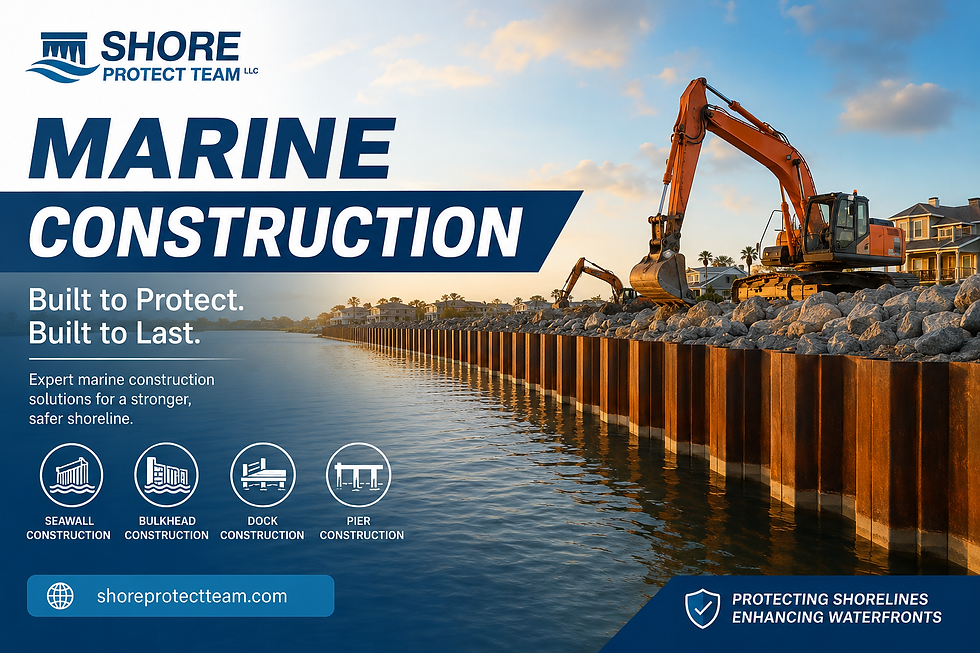
Waterfront structures experience constant environmental forces that inland buildings rarely encounter.
Wave action gradually transfers energy into foundations and shoreline structures. Wind places additional loads on elevated components. Heavy rainfall increases drainage demands, while fluctuating water levels may expose or submerge structural elements throughout the year.
Engineers account for these conditions during the design phase by selecting appropriate foundation systems, structural connections, drainage solutions, and protective features that improve resilience over time.
Rather than designing for average conditions alone, experienced professionals prepare structures to withstand demanding weather events while maintaining reliable long-term performance.
Balancing Structural Performance With Environmental Responsibility
Modern waterfront development goes beyond building durable structures. Today's projects also emphasize protecting the surrounding environment while meeting the property owner's goals. Responsible planning reduces unnecessary disruption to nearby ecosystems and helps projects comply with local, state, and federal regulations.
Contractors often install erosion-control measures before construction begins to keep sediment from entering the water. Temporary barriers, controlled work areas, and carefully managed drainage systems help preserve water quality throughout the construction process.
Many projects also retain existing native vegetation whenever practical. Healthy shoreline plants naturally stabilize soil, reduce erosion, and support local wildlife. When vegetation must be removed, replacement landscaping is often incorporated into the final project to restore ecological balance while enhancing the appearance of the property.
Avoiding Common Planning Mistakes
Some waterfront projects require costly repairs simply because important decisions were overlooked during the planning phase. Avoiding these common mistakes significantly improves long-term performance.
Underestimating Future Maintenance
Every waterfront structure requires periodic inspection and maintenance. Failing to consider future access for inspections or repairs can increase ownership costs over time.
Using One-Size-Fits-All Designs
No two waterfront properties experience identical environmental conditions. Designs should always reflect the site's unique soil characteristics, water movement, and shoreline configuration rather than relying on generic construction plans.
Delaying Small Repairs
Minor problems such as loose fasteners, small cracks, localized erosion, or blocked drainage rarely improve on their own. Prompt maintenance prevents these issues from developing into major structural concerns.
Ignoring Drainage
Poor drainage is one of the leading causes of shoreline instability. Water trapped behind retaining structures increases pressure and gradually weakens foundations, making proper drainage an essential part of every waterfront project.
Long-Term Value Comes From Quality Construction
A well-designed marine project provides benefits far beyond its initial appearance. Reliable waterfront infrastructure improves safety, protects valuable property, supports recreational activities, and contributes to higher property value.
Although professional planning and premium materials may require a greater upfront investment, they often reduce lifetime ownership costs by minimizing repairs and extending structural service life.
Property owners who focus on quality rather than the lowest initial price typically enjoy better long-term performance and greater peace of mind.
Conclusion
Successful waterfront construction begins with thoughtful planning, detailed site analysis, durable materials, and engineering solutions tailored to the property's unique environment. Every decision—from foundation design and drainage to material selection and maintenance planning—plays a role in determining how well a structure performs over time. By investing in professional planning and responsible construction practices, property owners can create waterfront improvements that remain safe, functional, and visually appealing for many years while protecting both their investment and the surrounding shoreline.



Comments